Showing posts with label autobiography. Show all posts

Friday, 11 July 2014

How I came to write 'The Making of SWALLOWS & AMAZONS'


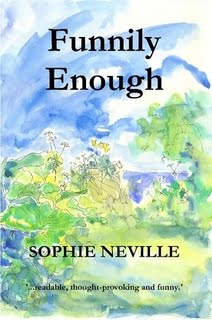
Back in 1991, when I was at home in bed suffering from chronic fatigue, I kept a diary that has been adapted into the book 'Funnily Enough'. I wondered what my mother would say when she read it, as my portrait of her is pretty blunt, but all she suggested was that I should think about making the diaries I kept as a child into another book. She was referring to the year 1973 when I was given the role of Titty in the feature film of Swallows & Amazons, made on location in the Lake District. She'd made me write the diaries in the first place.


In that summer of 1991 my father took the Humber yawl he had just finished building in the garage up to Windermere to take part in a Steamboat Rally.

Steam Boat Association Rally on Windermere1991

I wasn't very well but he was staying in great luxury at the Motorboat Racing Boat Club and Mum thought the mountain air would do me good. She was right. I was also taken back to the magical place where I had spend part of my childhood, a very memorable part.


Here is an extract from my diary, published as the book 'Funnily Enough'

2nd August 1991 ~ 
We left the crowded waters of Windermere and drove through rain to Coniston Water. It was peaceful and still and wild. We drove up the eastern side. The oak woods clinging to the hillside and flowing down to the shore took me reeling back to my childhood. ‘Here we are, intrepid explorers, making the first ever voyage into uncharted waters. What mysteries will they hold for us? What dark secrets will be revealed?’

Long ago I appeared in the feature film of Arthur Ransome’s book Swallows and Amazons. I played Titty, or rather I was Titty for a while wearing thick blue gym knickers, which the crew referred to as passion killers. The book was written in 1929 and although the film adaptation was made in the early ’seventies it had an ageless quality and was repeated on television at Christmas time year after year, between Rock Hudson and Doris Day. I was once handed a copy of the TV billings in the Radio Times. On one page I was credited as producing a documentary for teachers that I’d just spent six months pouring myself into. Above it was a huge colour picture of myself as a gawky looking child, described as the star of Swallows and Amazons. My life travelling in circles. Our Head of Department caught me in the lift. ‘Do you think I could have a VHS tape of your programme?’
‘Oh, yes,’ I said, thrilled that he was interested in my series. ‘But I haven’t finished dubbing the music yet. Do you mind having a copy with the timecode on?’
‘Ah, er. No. It was actually a copy of Swallows and Amazons that I wanted; my sons are longing to see it.’ And off he rushed.

My father tipped his boat off the trailer and we motored over to Peel Island where we’d made the film. Wild Cat Island. It was slightly less over-grown but had hardly changed in the eighteen years since I’d last been there. It still had just the one old fireplace where I’d cooked potato cakes with Virginia McKenna and talked about very savage savages. Arthur Ransome had us call self-important men in open necked shirts ‘natives’ then, so I suppose it’s not surprising that Granny, who was a real child in the1920s, still does.
I walked down to the secret harbour where I captured the Amazon, up to the oak tree that I climbed ‘for fear of ravenous beasts’ and on to the place where we had gutted fish. It’s a wonderful island. I’d love my children to be able to go and camp there. Not that I did in reality, I was only ever there with an eighty-strong film crew. I’d worked hard, even then as a child. It was often cold and we would have to hang around for what seemed like hours, waiting for lights to be set or clouds to pass. As I walked out over the same rocks I began to feel the emptiness of not having enough to do. Strangely enough, filming is an incredibly boring occupation for children who find it difficult to endure the hanging around. It’s a restrictive discipline; I hadn’t been allowed to go off exploring or even walk around the headland then. Now I don’t have the stamina.

Sten Grendon, Simon West, Virginia McKenna, Suzanna Hamilton and Sophie Neville in 'Swallows & Amazons' directed by Claude Whatham  ~ photo: Daphne Neville

It was only after others read this section of Funnily Enough, and much urging from various members of The Arthur Ransome Society, that I was finally persuaded to convert the diaries kept in 1973, when I played Titty, into another book. It is now out in paperback - quite a fat one at that. StudioCanal, who own the film rights, graciously allowed me to reproduce a number of official stills from the movie and have released a restored version on Blu-ray and DVD with a fabulous extras package. My book is also illustrated with call sheets, old letters, snap shots my parents took on location and three maps that I have drawn to show where you can find the locations next time you are in the Lake District.

The Making of Swallows & Amazons(1974)' is now available from Amazon and all good bookshops
the ebook is out under the title 'The Secrets of Filming Swallows and Amazons (1974)

Saturday, 4 May 2013

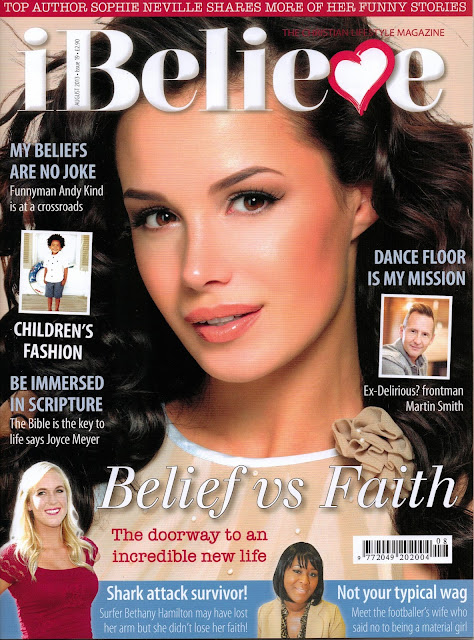
iBelieve, the Christian lifestyle magazine full of interesting testimonies


I was dazzelled to find that this month 'Funnily Enough' is being included alongside feature articles on such great Christian authors as Joyce Meyer, Nicky Gumbel and Sarah de Carvahlo


And there is an hilarious cartoon of me, looking GLAMOROUS and organised.
I'm always packing things up for the post but never this neatly.


For two issues of iBelieve please click here
To subscribe to iBelieve please click here.


Wednesday, 2 January 2013

The World in One Room

~ Jessica Taylor's life with M.E. ~

Do watch this true story of a lovely girl who has been suffering from severe M.E. She has been truly courageous in her battle with this debilitating disease. Her aim is to make the world aware by encouraging people to watch this autobiographical video.

When you have Post Viral Fatigue it is tempting, when you feel better for a day or two, to return to normal activities too soon. Hopefully, Jessica's short film will encourage patients to convalesce properly. She witnesses to the danger of severe ME setting in. 

Saturday, 27 October 2012

Daffodil our steamboat kept on the River Thames

Alastair Fothergill researching his first film for the BBC NHU on the River Thames

One of the characters in 'Funnily Enough' is Daffodil, my father's steamboat. She was built in 1901, a 24' river launch with a cabin long enough to sleep in and an unusual deck that extened out over her stern. For as long as I can remember her hull rested under a sycamore tree in our garden, draped in tarpulines, looking out over our lake. She had to wait for my father to find an engine that would suit her and the time to put her right.

Martin Nveille

Suddenly things started to move. Daffodil was decked with gaboon and teak, a boiler was found and clad, a funnel added. She was even fitted with a steam kettle. I helped a sweet old plumber with the pipe-work that connected boiler to engine, lagging pipes that we knew would become hot. The was to make her accelerate was simply to open up the steam valve - turn on the tap. She did have a gear that would throw her into reverse.

Steamboat engine

Once everthing was fitted, painted and shining we towed her down to Bossom's Boatyard at Port Meadow on the Thames. She was launched - and promptly started leaking. I leaped abraad to take out all our carefully stowed gear and provisions tucked into the cabin lockers. The boat yard calmly hoisted a cradle around her so she wouldn't sink. Her old timbers had been out of the water for too long. She was left for her timbers to swell but my father ended up having to have her clad in a fibreglass coat.

Steamboat on the River Thames

We had many happy weekends on Daffodil. It was wonderful to have aboat with a fire on board. It took about 45 minutes to get up steam but this never seemed a chore. On the whole we burnt steam coal which didn't produce much smoke. We did use wood but this menat that sparks could fly out of the chimney. They burrnt small holes in the canvas canopy, which was made to cover the cockpit. One got me in the eye when I was stading on the roof in a lock. It left me very sore for a day or too but I recovered.


Martin Nveille in his Steamboat on the River Thames

Daffodil's engine made a wonderful sound and the smell of the high grade steam oil somehow mixed well with summer days on the Thames. With steam up she could go at quite a pace but was so well designed she never left any wake. One always had to take care no to run low on steam incase extra power was needed at a weir. She was terribly fragile. We had to take great care when going through locks and did not dare take her off the river, but people came to her and she is lovingly remembered.

Martin Nveille's steamboat on the River Thames


If you would like to read more about my father, Martin Neville and his boats, please go to

Sunday, 16 September 2012

Jake the Dog ~

'Funnily Enough'


'You use funnily enough to indicate that, although something is surprising,     
it is true or really happened.'

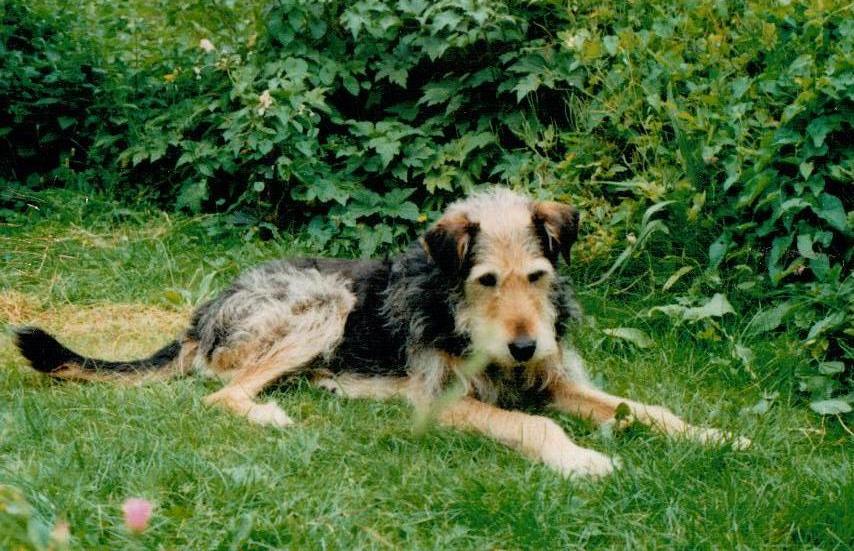
Being ill for long time can be incredibly boring. Although he had no idea why I was lying around all day, it was our dog Jake who helped me to cope with the tedium of Chronic Fatigue. He would come upstairs, of his own accord, just to keep me company and was happy to rest with me all day long.

Funnily enough, Jake was born under my bed one Christmas morning. Daisy, our rather dim Airedale, who looked like a ginger biscuit on legs, unexpectedly gave birth to three unusual looking puppies. Jake was the one my parents chose to keep. Like many cross-breeds he proved a wonderful dog, living to a great age.

'Funnily Enough'

Jake was a character; a dog who seemed to have a sense of humour. Although he was not particularly well trained he had quite a notable career as an actor. This started when he cast himself as the hero in 'The Day in the Life of the Otter', which was made at home by the BBC Natural History Unit. In the story he rescues one of the otters from drowning in a fisherman's keep-net. It was a role he shared with Spike Milligan, who provided his voice. On the strength of this he appeared in Mr Bean with Rowan Atkinson and was asked to star in a television commercial.

The fact that Jake was quite a big dog worked well on film. When my father played the part of an estate agent in an educational info-drama called 'The Walls of Jericho' Jake was there as his dog. He enjoyed appearing in a Day Time magazine programme for Granada Television. Mum was interviewed on how to make your own dog food. They called the item 'Jake's patty pies'. I think all he did was eat them. When she tossed small meat balls in his direction, he'd catch them in mid-air and look terribly pleased with himself.

However, when our house was used as a location for 'The House of Elliot' Jake decided to take a back seat. He took up a position at the rear of the catering bus from where he surveyed progress of the shoot. The crew gave him the title 'Director of Operations'.  


'Funnily Enough'


Although he started life as a mistake, Jake proved a remarkable animal and is remembered with huge affection. He added an optimistic dimension to our lives and was a good friend of many. Honesty compels me to admit that I was slightly allergic to him, and perhaps he contributed to the load my system was having to cope with but he staved off loneliness. That was a great blessing.


Wednesday, 18 July 2012

Living with Otters ~


'Funnily Enough' author Sophie Neville with her tame otter Beenie

Sophie Neville with her tame otter

We have kept tame otters at Bakers Mill since 1980. These are not the large, secretive European otters that are native to Britain but sociable Asian short-clawed otters bred in wildlife parks that we've been asked to hand-rear, usually because they have been neglected by their mothers. We keep them, under license, for educational purposes. Their enclosure has a stream running through it and bath-tubs where they swim. They are cautious about of swimming in the deep water of our lake - unless we swim with them, which is a somewhat demanding experience. Being sociable the otters love showing off and are regularly taken both for walks and off to country shows around England and Wales where you can watch them and ask questions about otters.


Daphne Neville with her tame otters

Daphne Neville with her otters

My parents started lecturing on the conservation of otters thirty-five years ago, promoting the need for pure water in our rivers so that our native otters can flourish and re-gain healthy populations in the wild. At one stage they had four tame otters but they have never bred them, for these are exotic species that cannot be released into the wild.

There are thirteen different species of otter. They are often elusive and difficult to spot but I have watched European (or Eurasian) otters fishing along the coast of Skye, spotted spotted-necked otters playing in the Okavango Delta and Cape-clawless otters swimming at Knotsie Bay in South Africa. My mother has travelled the world to see to them in the wild  ~ to California where you find the sea otter, India where she supports the hairy-nosed otter project, to an International Otter Convention in Chile and has even swum in the Orinoco River with the giant otters of Bolivia that can reach twelve foot in length.


'Bee a Particular Otter' by Daphne Neville


Our first otter was called Bee. This was because otters smell slightly of honey. She had so many adventures that my mother wrote a children's book about her. This came out in hardback in 1982. When she found second-hand copies for sale on Amazon recently she had a smaller paperback version printed.
With illustrations by Jackie Gouvier they are designed so you can read one story a night at bed-time for two-weeks or so and make good presents.

If you would like a copy, and live in the UK, please send a stamped-addressed A5 enveople with £1.20's worth of stamps and a cheque for £5 made out to the author, Daphne Neville, Bakers Mill, Frampton Mansell, Glos, GL6 8JH. You can find second-hand copies of the original hardback on Amazon - please see the carosel of books below.


'Funnily Enough' author Sophie Neville with her tame otter Beenie

Sophie Neville with Beenie the Otter and her first painting

Hand-rearing otters is very demanding. Can you imagine having an otter cub in your bed? They are hyper-active and extremely dexterous. Until the age of 4 months they are frightened of water and will not even go near a running tap. Introducing them to it takes time and patience.

Beenie the tame otter belonging to Sophie Neville

I was once given the responsibility of looking after a lovely little female otter we were asked to rear called Beenie. She became very tame but I quite ran out of ways to entertain her. Once she was about three months old I put down a plate with a little water and added colour from may paintbox - watercolours in rose pink and sap green. I laid down a slab of mount board and let her play. The result was a series of truly beautiful paintings, delicately executed. Once framed they looked beautiful. We auctioned the one above to raise money for charity - not for conservation, as it happened, but for The Hyperactive Children's Support Group. It seemed apt. Beenie went on to open the Wildlife Arts Society Exhibition in Bath, appearing in The Daily Telegraph as a result.

'Funnily Enough' author Sophie Neville with her tame otter Beenie

Beenie the Otter with Sophie Neville in the Daily Telegraph


On another occasion we appeared on the front cover of The Daily Telegraph newspaper with the Prince of Wales and Beenie became a true ambassador of her species.


The  Prince of Wales with Sophie Neville

I have related some of the stories about keeping otters in 'Funnily Enough' but there are many more. You can see more of my own sketches of the otters - and their attempts to distract me on the Ride the Wings of Morning Blogspot.


Sophie Neville, the girl with a tame otter 


Monday, 9 July 2012

Parrots I have known ~


'Funnily Enough' by Sophie Neville available in paperback from Amazon


Today I have been writing about parrots. Parrots I have known. Parrots I have lived with. Parrots I've observed in the wild. I've even appeared in a movie with a parrot on my shoulder. And on television.  In front of the camera not once but twice!  Am I brave or what?

When I was little my grandmother kept two budgerigars. They were called Pippernella and Chrysanthemum. Pippanella was blue, Chrysanthemum was green and yellow. Everything about them entranced me. If we were good and very gentle we were allowed to take them out before bedtime. Since Granny was an invalid, stuck in the house all day long, the birds had become her very special friends. They were beautifully cared for. If one of them shed a tail feather it was kept in a glass vase on her desk.

My parents must have kept parrots, parakeets or macaws for most of their married lives. We were given two of them. They out-lived their original owners and were brought to our house. I've no idea why. It is amazing that they stayed. My mother couldn't bare the thought of them being cooped up in a cage so let them out as much as possible. They loved this but it caused endless dramas. Josey-Jo, my mother's Blue-fronted Amazon parrot would fly around the house only to lose sight of places to perch. If you weren't careful she'd land on the top of your head. It can give a girl quite a fright. Once she landed on the side of a frying pan, once she ended up in the dish-washer. Dad nearly turned it on with her inside. She did terrible damage too, nibbling away at the top of veneered corner cupboards or antique picture frames, dining room chairs and rather a good chest of drawers.

We thought that an aviary would be the answer. The result was an enormous parrot cage built outside the kitchen door. This is illustrated above. Please don't copy the design. It did not work well. For some reason it now houses guinea pigs.

Josey-Jo was eventually given quite a large cage in the dining room where she happily spent her days. She originally belonged to an old lady and had picked up her voice. When you arrived home she would say, 'Hellow' in a slightly cracked and rather smart inquiring manner, sounding exactly like an 87-year-old woman. Any stranger would ask if Granny was still at home. No burglar alarm could work better.

Henry, our scarlet macaw, had a perch rather than a cage. He was unable to fly but loved being allowed to sit in the willow tree or on a post in the garden where he could see everyone come and go. Sometimes he would climb down and alarm visitors by walking pigeon-toed across the lawn to greet them, bent forward so that his tail did not touch the grass. His long red tail feathers were kept in a jug too.

When I lived in Africa I often came across small Meyer's parrots in the wild. Apparently they are often considered 'parrotlets'. No matter. They gave us such joy. One sighting and one's spirits would soar. Apparently they are classified as 'trans-continental parrots', having the widest distribution of any parrot in Africa. You can find them from South Africa up to Ethiopia, flashing through the trees.

The filming? Ahh, you can read about filming with Captain Flint's parrot and appearing on Animal Magic on my other blog. The most bizarre experience - which I don't think anyone has ever written about - was when I went with Alastair Fothergill to watch the wildlife camera man Simon King filming great tits in Bristol. They were about to fledge from a bird box nailed to someone's shed in rather a grotty part of town. The only way of reaching the long back garden was through a basement flat belonging to an odd old couple who were living in an extreme state of squallor and filth, almost like tramps. They had a budgie. It seemed very happy and was singing away but obviously hadn't been cleaned out for years, so many years that a column of black and white flecked guano had formed on the base of the tiny cage, rising nearly five inches high towards the perch on which the little bird sang. I didn't know what to say. We walked on to relieve Simon. This was crucial. He hadn't been able to leave his camera position all day for fear of missing the moment when the little great tit chicks left the nest. As a result he was dying to go to the loo. I told him that he'd better let Alastair take over for a while or he'd end up like the budgie.

Sunday, 17 June 2012

Questions for Book Clubs

1.  Is it important that Funnily Enough is a true story? Why?

'Funnily Enough' by Sophie Neville available in paperback from Amazon


2.  Whilst most readers say they laughed out loud whilst reading 'Funnily Enough' one reviewer thought it a sad story. Another said that it is not a funny book.  Is it sad?  Is it funny? Would the funny stories lack appeal without the reality that ME or Chronic Fatigue is a disease that needs to be taken serioulsy?  


    'Funnily Enough' by Sophie Neville available in paperback from Amazon


3.  Do you think the story could be made into a stage play?
Or could be read on stage with music and sound effects?


Author Martin Neville


4.  How would you alter the story to make it into a feature film? Would you make it into a romance, a thriller or both?


    'Funnily Enough' by Sophie Neville available in paperback from Amazon


5. One Book Club thought that the Christian content would hinder sales and book reviews in mainstream newspapers and magazines. Do you agree?  If you were a publisher would you reduce or cut out the Christian sections?

'Funnily Enough' by Sophie Neville available in paperback from Amazon


6.  Do you want to know what Sophie did next?


'Ride the Wings of Morning' by Sophie Neville available in paperback from Amazon


Thursday, 19 April 2012

Scotland's Knitters - as featured in 'Funnily Enough'

My time working in the fashion industry 

Sophie Neville


Occasionally I am asked if I ever did any modelling.  I have not, but there was a time when I worked in the knitwear business, apprenticed to my aunt, in truly medieval fashion. She was the primary British producer of hand-knitted cashmere which sold, wholesale, on streets paved with gold: London, Paris, New York, Tokyo.

The epicentre of Aunt Hermione’s knitting enterprise was situated in the stables of her rambling Georgian house above the council estates of Loch Lomond, designated an area of high unemployment at the time.  My apprenticeship was organised by the head of our family, Granny, who paid for my train fare. Whilst not exactly sleeping under the counter, I worked for the experience alone. Aged thirty.

Hermione Spencer Cashmere

I was first enslaved when Val the head seamstress went ‘off sick with depression’. Before leaving she explained how the business was managed.

‘Nothing’s actually made here. Hand-knitted garments arrive in the post from outworkers and wool for the next order is sent back with a cheque for the labour.’

Not too complicated. I started to help by weighing balls of cashmere for various consignments, seeing the activity as the dawning of a dazzling new career in the fashion industry. It was more difficult than I expected. Gloves for Polo Lauren had seven different colours in the pattern. Small amounts of valuable yarn had to be calculated and compiled. Incredibly complicated.

The cashmere jerseys that came in were stunning. I was amazed as they got bundled up, shoved in the washing machine and later hung up to dry on a pulley above the Aga in Hermione’s kitchen. Her dining room was full of cardboard boxes. Piles of garments in different colours and sizes covered the table, waiting for despatch.

My aunt was to be found in her office busy making designer-ish sketches whilst waiting for Bloomingdales on the phone and forecasting her fluctuating turnover.

‘The drawings are simply to impress the Regent Street buyers,’ she said. ‘I won’t use them for anything else. There is absolutely nothing artistic about the design of separates,’ she went on. ‘I just ask what will sell. If they say Fandango is the colour for next year, Fandango it will be.’

‘What are these buyers like?’

‘Oh, hysterical.  I love them all. They don’t love me though. They just want to know I’ll deliver.’  I was then instructed to sew labels on a pile of pale pink polo-necks so she could get an order off to Japan before Christmas.

I assumed that taking over the production would stretch my talents but found it just entailed dealing with a series of chatty knitters. They rang up non-stop. ‘Knitters in a twist,’ my teenage cousin called, wafting by.

‘Don’t let them talk for long,’ hissed Hermione.

‘Doo-n’t let your wee aunt leave me with noth-thing too doo over Christmas, noo.’

I was urged not to let them bully me. ‘They’ve no reticence, these ladies. They seem genetically pre-programmed to knit and get anxious if they don’t have any work. They are addicted to it. In fact they can quite persecute you for more.’

I learnt that there was a knack to keeping phone calls short. ‘You say: “OK – very gud. Bye.” as fast as you can and slam the phone down.’ I would never have dared to be so abrupt when I worked for the BBC.  People might have been offended and made a fuss about paying their licence fee.

Hermione said that the buyers could cut you short too. ‘Oh, when I was in New York I spent all day plucking up the courage to ring one designer. I eventually managed to speak to her and was busy explaining how each garment is an original, carefully knitted by hand, in the traditional Scottish way, when the woman leant back in her chair and said, “I don’t care if they’re knitted by monkeys, I don’t want ’em.”’

‘How upsetting.’

‘Didn’t matter. The people at Hermes liked them.’

My uncle went on to explain that a lot of the outworkers are looking after infirm relatives and cope with the frustration and endless, blaring television by knitting.

‘It can become an expensive hobby unless you’re commissioned. Their fee - ‘knitting money’- gets put in a jar to pay for treats and holidays.’ Hermione’s marketing spiel described this as ‘sustaining a traditional craft’.

Hermione Spencer Cashmere
     
Despite the banter in the workroom I was to learn how truely wonderful the knitters were. It was not just their skill that was highly valued. When we only had three days to get samples together for Yves St Laurent in Paris, the local ladies rose to the challenge and pulled out the stops. They never missed a deadline.

‘They are incredibly speedy and can easily complete a complicated cable pattern in a week,’ my aunt insisted. ‘There are over three hundred of them. The thought of them all knitting into the night is really quite terrifying. Actually one of them never sleeps; hasn’t been upstairs for twenty years.’ I didn’t believe her. ‘It’s quite true. She just lies on her sofa and snoozes for a couple of hours. There is a huge Alsatian dog so everything comes back hairy, but she’s a frightfully good knitter.’

Hermione seemed to have had all sorts of adventures with the knitters’ husbands...

‘I sat on one. He was lying in the gloom under a blanket on the sofa and I simply didn’t realise he was there. I went to visit another knitter and walked straight into the bathroom by mistake. There was a man in the bath. A big fat one.

'Another lady was unexpectedly late with her knitting. When I rang up she said, “Well my husband’s just died. I haven’t buried him yet, so I’ll do that and then get the cardi finished, OK?”’

The knitting orders kept me absorbed and I loved the feel of the cashmere, but the work had clear limits. The challenge was Hermione’s. It was her name on the label. The zenith of my internship was reached when I learnt how to wind wool electronically. Granny rang to see if I was being useful, earning my keep. When I told her a ball had just flown off the winder and hit me on the nose I found her surprisingly sympathetic.

‘Oh yes, I remember. All those wretched little balls of wool.  When are you going to South Africa?’


Sophie Neville in Hermione Spencer Cashmere
     
After 25 years Hermione sailed away from knitwear design, but I still have one treasured cashmere jersey. Hand-knitted in Scotland by a dedicated expert.

Monday, 16 April 2012

How do you cope with being laid up in bed day after day?

15th April ~ A huge Get Well card has arrived, signed by my entire cast and crew. It’s a picture of a crocodile in bed with a thermometer in its mouth. Not a very sexy looking one. My P.A. had written ‘Rest: don’t feel guilty about spending time in bed, you work too atrociously hard.’
I’m reading a book about the French Revolution but I can’t take it in; my brain seems to have shrunk to the size of an apricot.
Mum went around in a Police car today with a video camera, in an attempt to catch speeders speeding. The life of a J.P. (Justice of the Peace.) She absolutely adores being a magistrate. Having always complained about public lavatories, it gives her a title suitable for bullying people to do something about them. And, she always had an aptitude for prosecution. I can remember waiting at the traffic lights when we were little when Mum sharply informed a boy on his bike,
‘It’s getting dark, you should have your lights on.’
‘So should you lady,’ he answered back.
He was right; she hadn’t turned her own headlights on.


Alastair came to see me, leaving a trail of destruction. It comes naturally to him. In the last few years he has broken the dishwasher, sloshed coffee all over the Persian carpet and split open our pink bath. He stood in it. For some reason he got in without any water, which was just as well as Dad found a live electric wire running underneath. Rats had gnawed off the plastic insulation.
It’s sweet of Al to come over, but it’s rather enervating having him around. Like many high achievers, he switches from being frantically outgoing to being totally self absorbed. I just wish he could understand that we love him for who he is and not for what he can achieve.
I don’t know; he’s crazy about what he does; Alastair is even more engrossed in his work than I am. His great passion in life is birds and he loves, loves, loves making films about them. I once asked him what was the most important thing in his life, thinking he might talk about his faith or his family, his health or even perhaps me. He said, ‘Peregrine falcons.’
‘Oh. What’s the second most important thing in your life?’
‘White fronted bee-eaters.’
James says he finds it somewhat annoying; not the bird fetish so much as the desire to get up so early in the morning. Al says he’s sure everyone thinks he’s bonkers but doesn’t care. The great thing is that one is whisked along with his enthusiasm and where it takes you; out to see gannets on the Farne Islands in sparkling sunlight and high seas or off to remote parts of Morocco to find the flamingos and egrets he last filmed in the Camargue. Surprisingly good fun. A group of us girls went out to Kenya one Christmas to see him when he was making a film on the white fronted bee-eaters with Simon King. Al was so focused on the project that when we returned from a long and adventurous journey to Lake Turkana he didn't even say Hello. Mind you, he was battling to complete a sequence with a mongoose. (They predate on bee-eaters.) It wouldn’t do what Alastair wanted at all and that can be extremely frustrating. I had the idea that Marmite might smell like a female on heat. They got a shot of the mongoose sniffing a bit but somehow the Marmite got everywhere. Under Alastair’s arms, on Simon King’s pigtail, all over the mongoose, and I was covered in it. Mongooses don’t smell very nice either. The idea of making wildlife films suddenly lost its charm.


16th April ~ My littlest sister Mary-Dieu, aged nineteen, has a baby girl aged one. She’s called Daisy, has no schedule at all and arrives with a huge pile of laundry. It’s pretty difficult looking after her as she normally sleeps in bed with my sister and objects to being plonked in a cot. But she’s come to stay because Mary-Dieu wants to go ‘Clubbing’. Night clubbing. The thought alone exhausts me.
Daisy is a delight. Her big eyes and curls make her look like a little imp with a question mark on top of her head. I really didn’t know what to do with her, but found Atalanta’s baby-walker behind the sofa. Daisy thought this was great and spent all afternoon whizzing about my room. I rather need a baby-walker myself.
Nicola, one of my best friends from school, came over. She looked at Daisy with horror and then said in a small voice, ‘I’m pregnant,’ sounding like a frightened sixteen-year old. She isn’t sixteen; she’s twenty-nine and has been married for two years. I think it’s exciting that she’s going to have a baby. I showed her the schedule, which is still hanging on the sitting room mantelpiece.
‘Oh, Sophie, I thought that was for you.’
‘Yes. I suppose it could be.’
‘Do you manage to keep to it?’
‘No, we’re always behind.’
Daisy is sleeping with Mum in her bed and my father has migrated to his study. I lie alone in my high four-poster, looking at the card of the crocodile. Mary-Dieu (Dieu as in mildew) was nearly four when we adopted her. I was fifteen. She was the sweetest little thing, easygoing, bright and extremely articulate. Our only problem, and it was quite a hazard, was that she was, and still is, radically outspoken. She could state the obvious at embarrassing and inopportune times. We all had to go to court for her formal adoption. Mum knew that the old judge only had one hand. The other had been replaced by a hook. We were all terrified that Mary-Dieu would declare, ‘You’ve got no hand,’ or something and had been drilling her frantically. Instead, she walked into the court, paused in the doorway, and when sure of everyone’s attention, looked at the judge, looked up at Mum and said, in her clear piping voice, ‘I no say anything about the hook. I just tell him to be careful of the crocodile.’


17th April ~ Mum came plodding upstairs to ask if I wanted Rufus Knight-Webb to come and see me. I looked at her a little oddly. I know that Jesus wanted the sick to be visited but I’m not sure I should have so many people in my bedroom. Rufus is the son of our old G.P. and I haven’t seen him since he was adolescent. He’s an artist and lives in London; I’m sure he won’t want to come.
‘You’ve absolutely got to see his wife. She’s beautiful.’ I’d no idea they were downstairs.
Mum was getting impatient with me. ‘It’s all right, they live in a squat.’ She was referring to the chaos in my room.
Rufus’ new Yugoslavian wife is beautiful. Startlingly so. In the way she is, as much as how she looks. She speaks not one word of English. Rufus, in contrast, hadn’t brushed his hair for a long time and spoke without drawing breath.
‘I’m painting with ultra-violet in the dark,’ he told me. I could just imagine it. Rufus in Peckham, painting in the dark. I showed him the luminous stars stuck to the ceiling above my bed. His works of wonderment need to be illuminated by a black light or something. Weird. (How can you get black light anyway?) They’re going to James’ dance in May, when we all have to dress up as soap opera stars. I tried to persuade him to go as a carrot and represent The Archers.

Sophie Neville


My photos of South Africa have arrived from the developers. Oh, how I wish I’d never come back. The horses look so beautiful. I’m sitting on a big black Friesian with a flowing mane and tail. There are shots of us riding with the game. Shots of us walking through the mountains. Well, me walking, Sarah-Jane striding. I must’ve known her for twenty years. She has a wild and free life. And I mean a life in the wild, where she has freedom. Strong minded and independent, she’s torn away from convention and does what she wants. And why not? About five years ago we drove down through Africa and, although she had no money at all, she decided to stay and start her own business in tourism. Rebecca was on that trip. I’m going to send her some of these photographs and persuade her to get out there. It’s very much her thing.

Sophie Neville by Sophie Neville

18th April ~ Syndrome worse today. Achy back. I can hardly do anything at all. It’s so frustrating; being unproductive goes against the grain of my essential make up. I’m not even much fun to talk to. But surely I’ll be better in time for James’ party.
I went to see my family’s General Practitioner. She peered down my throat.
‘Yes, well this is infected for sure, but tell me, do you always push yourself to the limit?’
‘In what way?’
‘Were you getting stressed-out at work?’
‘I was under a great deal of pressure, but I’m used to coping with that. It can be all quite exhilarating.’
‘How long have you been doing this job?’
‘I’ve worked for the BBC for about eight years, and have been in this particular job, directing stuff, for three.’
‘But is it a stressful job?’
‘Yes, it’s up to me to come up with the goods; the filming is pressurised,’ I admitted. ‘I work with children who are only allowed on set for a limited time, so I have to operate at a fair pace, directing with two cameras, but it’s not as if I was getting particularly anxious or worried. I enjoy it.’ I do, I love my work. I didn’t go into the details but it was the stupid recce that nearly killed me. These times of planning and reconnaissance are normally fun, but we had no time at all. I was going to have to film difficult sequences from a canal barge and wanted everything to be well organised. It was all rather difficult to envisage. Instead of delegating, insisting my production manager chose the locations, I’d spent a Saturday cycling miles up a gravely towpath and I think I pushed myself too hard physically. The only stress was on my muscles, which I’d thought would be good for me. But I was still on antibiotics and must have felt better than I really was.
‘Well, you have had two bad bouts of ’flu this year. I’d say you definitely have post-viral fatigue.’
‘How long can I expect to be ill for?’ I asked.
‘It’s hard to say.’
What I somehow never managed to explain was that while I was with Sarah-Jane I recognised the fact that I was badly in need of a long break; a proper sabbatical.
I staggered back from the surgery, sank into bed and spent all afternoon in a deep, hot sleep. Mum came back from Gloucester looking pretty exhausted herself. She told me that Mary-Dieu was still in bed when she’d returned Daisy at half past five. In the evening. Honestly, even I get up before then, and I’m meant to be in bed.
‘Her basement was filthy,’ Mum reported, ‘so I set to, scrubbing away. Mary-Dieu just sat on the sofa smoking, and watching me.’ Mum hates cigarette smoke. ‘I don’t suppose the night clubbing was much fun.’ Mary-Dieu’s lived in Gloucester for two years but hasn’t many friends. She seems to lead a nocturnal sort of life that I suppose cuts you off from the world after a while.
Mum, worried about christening her granddaughter, once asked Mary-Dieu if she had a church. ‘Yeah, I belong to The Church of Can’t be Bothered.’ It’s her choice but she must be so bored. Poor Daisy has to put up with all the muddle and smoke and the darkness of this ~ I don’t know what you call it ~ alternative lifestyle. Mum was quite funny though, going on about the mess; her own room is just as bad. The things she has on her windowsill alone: piles of letters, Agatha Christie books, wire coat hangers, one shoetree, empty boxes, her old specs (I bet she’s been looking for them for ages) and we are not allowed to interfere. Mary-Dieu knows this of course.

Sophie Neville


19th April ~ Woke up with a stiff neck, feeling turgid and somehow compressed. It seems I’m unable to do anything productive. I ended up sitting slumped by my bookshelves reading about a boy who was dying, called William*. I was completely caught up by the story. His mother, Rosemary Attlee, tells the first part. Now I’m reading the journal William wrote in the last four months of his life. He was nineteen. It’s a spiritual journal and so touching. All true and much better reading than the French Revolution.
This diary of mine ought to be a spiritual diary but I’m shy about what people might think. I mean, it’s very personal. I used to think faith was a private thing, but we’re not going to learn anything by internalising what we experience. Anyway, it’s exciting hearing about what God’s doing in people’s lives. I don’t know if what’s happening in mine will be. Where do I start? I’m in the middle of so much. Start where I am now. Not a good place because I feel that nothing spiritual is happening in my life at all. I feel clogged up intellectually (and can hardly spell. I’ve just spelt hour: OUR and her: HAIR).
Should people pray when they’re ill? Well, yes, I’ve so much time on my hands. I ought to try to get closer to God. He really is here the whole time. That I have noticed. It’s a staggeringly beautiful spring for a start. These last few days I’ve been sitting quite motionless for ages, just soaking in all that is around me. I look out of my bedroom window at the cherry blossom. It’s spectacular. In the past I’ve been so busy filming that I’ve missed this extraordinary sight for years. Now it seems as if it’s out just for me, undaunted by wind or snow. Do people just get so busy they fail to appreciate God’s presence in their lives?


20th April ~ Tried to pray. Can’t; too groggy. Must, must keep my intellect at least ticking over by writing more creatively. It’s essential to persevere. And take risks.

P o e m
If it wasn’t for all the mud and rain
Reality wouldn’t be the same.
Better try harder.
Try brain exercise. Must read newspaper. Reach for The Times. Ghastly news:
It says that an estimated 100,000 people have just died in Bangladesh, killed by a cyclone. That’s an awful lot. But then you read (well, I read in Bill Bryson’s book) that 1,360,000 people in the USA are airborne (flying over it) at anyone time; that must be about 5,000 aeroplanes; more. Dad says unless a load of planes are in the air, there’s not enough runway space for them to park up. Can’t bear to think about it. Give up. I don’t think I’m very well. Perhaps I could write about being ill for the advance of medical science.
I was just beginning to feel dejected when Mum appeared bearing ten pairs of the most enormous knickers I’ve ever seen. Five pairs white, five pairs ‘flesh tone’. Tamzin, who claims to be my most down to earth sister but is really quite glamorous, had just sent them to her for her birthday. Being a housewife she doesn’t earn any money, so my brother-in-law Johnty had had to pay for them. What an hysterical present. Mum had asked for knickers and told her to get the biggest possible, but these are VAST.

Daphne Neville drawn by Sophie Neville

Dad, seriously concerned now about safety aspects of handling garden machinery, is writing an article about his experience with the rotary cultivator for The Kitchen Garden Magazine. They’ll just think he’s nutty.

21st April ~ Nicola has kindly given me some emu oil for my skin. Real emu oil, all the way from Australia. The Aborigines say it has wonderful healing properties. The only problem is that it makes me smell like a roast chicken.

I’d love to be married like Nicola, but it’s just as well I’m not. I can’t bear anyone touching me at the moment. You don’t when you have ’flu and I feel like one does the day after the fever has gone, only this day seems to be going on and on and on. I must thank God for all the good things. He is in control. Control over a sick girl smelling like an emu.


Dad came back from buying plants looking relieved as he learnt that he’s not the only one to have an absurd relationship with a motorised plough. The man who runs the nursery, who after all is a professional gardener, said he started his rotavator in the garage and for some unknown reason it leapt into reverse too. The thing pinned him to the wall, blades spinning frantically within inches of his person. Like Dad, he was all alone and there was no way of escape. He had to wait until it ran out of petrol, which took about forty minutes.

Sophie Neville


*'William's Story' by Rosemary Attlee (Highland, 1987)